Wasps · 2 min read
Wasp Colony Life Cycle in the UK: What Happens Each Month
From a single queen in April to thousands of workers in August, here is the wasp year explained month by month, with advice on timing treatment.
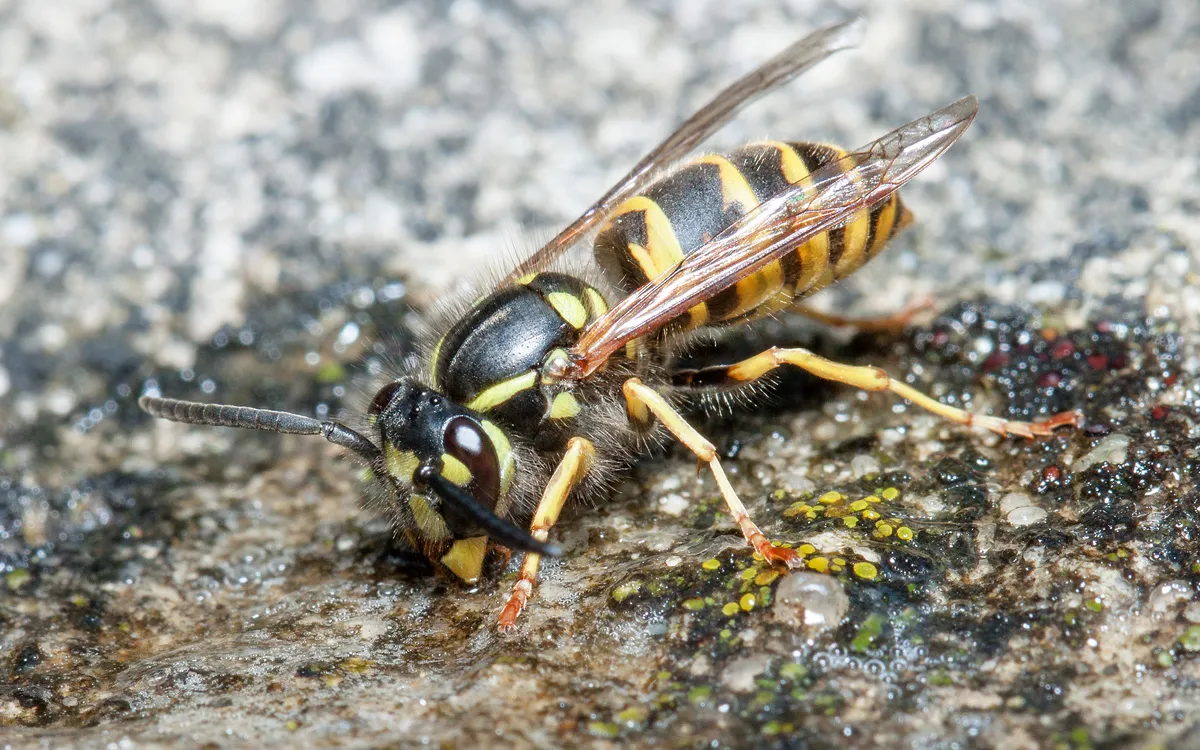
Wasps seem to arrive from nowhere every summer, yet their year follows a predictable pattern. Understanding it explains why a tiny nest in May becomes a serious problem by August, and why the insects suddenly become so irritating around picnic tables as autumn approaches.
Winter: a queen sleeps alone
Only young, mated queens survive the cold months. Each one hides in a sheltered spot such as a pile of logs, a loft corner or a gap behind cladding. The rest of the previous colony, including the old queen, dies off by late autumn. The empty nest is never used again.
April and May: a new colony begins
As the weather warms, the queen wakes up and searches for a site. She chews wood into paper and builds a golf-ball-sized nest with a handful of cells. She lays eggs, feeds the first grubs herself and soon raises her first helpers. At this stage a nest is small and easy to deal with, but it is also easy to miss.
June and July: workers take over
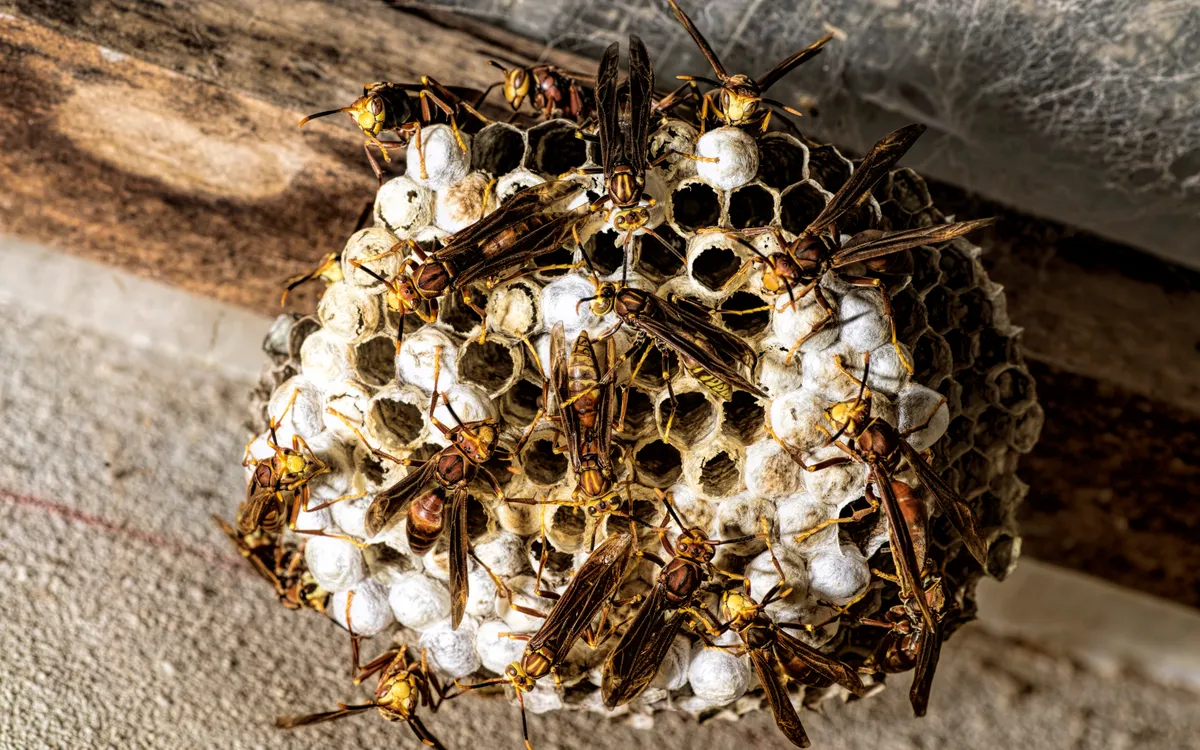
Once the first workers hatch, the queen stays inside and lays eggs full time. The workers extend the nest, hunt caterpillars and flies to feed the grubs, and defend the entrance. Numbers rise quickly. A nest hidden in a loft or wall void can double in size within weeks without anyone noticing.
August and September: peak numbers
- A mature colony may hold several thousand insects
- The grubs no longer produce the sweet liquid that workers rely on
- Hungry adults head for fizzy drinks, ice cream and bins
- Males and new queens are produced and leave to mate
This is the time of year when most calls come in. Wasps are most defensive now, so any contact with the nest carries a bigger risk than earlier in the season.
October and November: the colony fades
As temperatures fall the queen stops laying and the workers lose their purpose. They gradually die, and the newly mated queens find places to hibernate. Wasp activity around your home drops sharply, although a warm autumn can stretch it out.
When is the best time to act?
Early is always easier. A nest found in spring or early summer is smaller and treatment is simpler. If you spot repeated wasp traffic to one spot, do not wait for it to grow. Our wasp control team can deal with nests at any stage, and you can read our advice on wasp nest removal in Bury for more detail on what to expect.
Seeing wasps now and wondering if there is a nest nearby? Contact us and we will talk it through.